|
Broad Ripple Random Ripplings


The news from Broad Ripple
Brought to you by The Broad Ripple Gazette
(Delivering the news since 2004, every two weeks)

|
| Brought to you by: |

|

|
|


|

|

|
Converted from paper version of the Broad Ripple Gazette (v06n16)
Indiana School for the Blind history - part eight
posted: Aug. 07, 2009
Construction began in 1926 on the Indiana Blind School's new location. Modeled after a blind school in Scotland, operations commenced in September of 1930.
These scrolls originally appeared at the Blind School's downtown location in 1847.
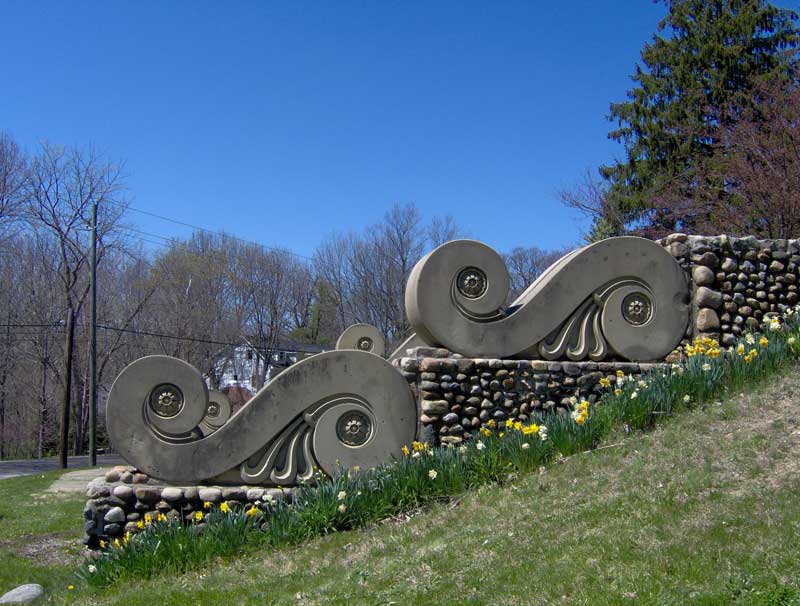
image courtesy of Mario Morone
During the Great Depression, ISB benefited from the Works Progress Administration, Civil Works Administration and Unemployment Relief Programs. Federally provided labor reconditioned 1,500 pieces of furniture and equipment. Dormitories were built in 1932, along with a steam plant, laundry facility, a garage and reflecting pool.
Three miles of roadways were built that included a 75th Street entrance around 1937, easing College Avenue traffic due to interurbans. However, as automobiles became popular, interurbans ceased operation during the 1940s.
Indianapolis landscape engineer James H. Lowery wondered how blind children could enjoy the pristine grounds. He planted an upper garden of flowers and a lower garden of shrubs and evergreens during 1937 and 1938, creating a Braille Garden.
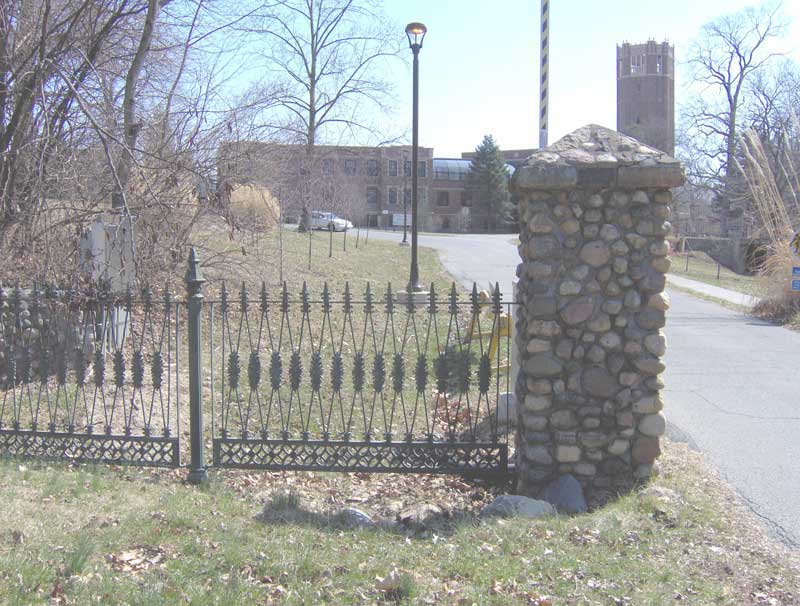
image courtesy of Mario Morone
| Brought to you by: |
|
|
|
"Each species was labeled with markers the children could read. Zinc material was used for signs engraved in Braille describing 125 varieties of evergreens, 100 different kinds of roses and over 500 types of shrubs," wrote Elizabeth Wishard. These zinc placards, having pliable and rustproof characteristics, told both the common and botanical name of each plant. "Students enjoyed the Braille Garden for many years as it attracted widespread attention as an educational and aesthetic medium," she added.
Superintendent George S. Wilson lived with his family on the campus after relocation was completed. After he resigned on March 1, 1934 at the request of then-Indiana governor Paul V. McNutt, Robert Lambert became the school's new superintendent. When honored by alumni at the school in 1941, Wilson was genuinely surprised, replying, "I only tried to give the pupils a good school and bring out the best in their natures."
He achieved far more, however. By revising the school's curriculum and bringing it further prominence as a pioneering school in educating the blind, his achievements as Superintendent rivaled that of William Churchman. Though they never had the opportunity to meet, their collective vision moving the school forward placed them at the center of its history. A plaque recognizing George Wilson appears inside the school today, near that of Churchman.
William T. Shannon was a school alumnus who returned to teach piano, organ and woodwind instruments in the music department from 1892 until 1939. He also taught private lessons to students in their homes. He translated music into Braille, with help from students like Ruth Carey (who will be profiled in this series). Their work composed a prolific musical library for current and future students. As Wilson led the school into a new era by shaping its academics, Shannon orchestrated its music department.
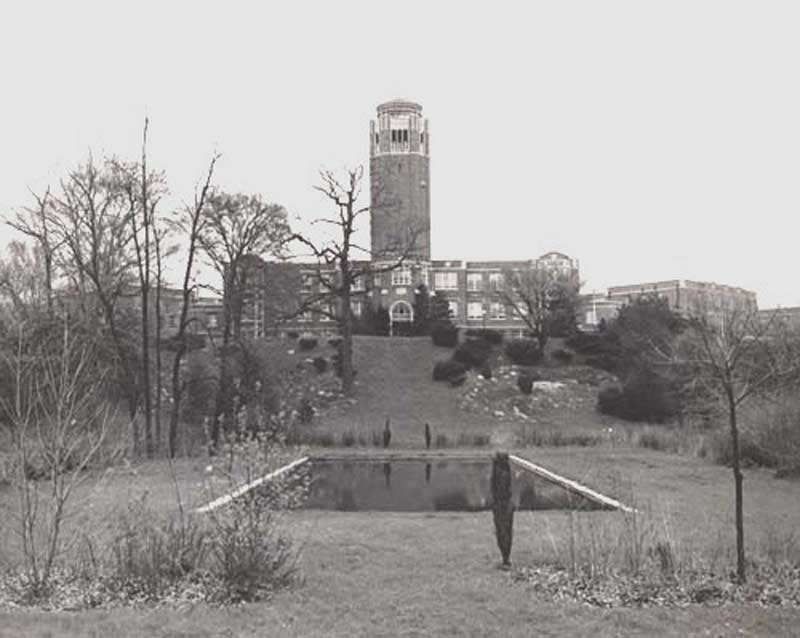
image courtesy of Mario Morone
ISB's bell tower offers a panoramic view of Indianapolis, though it is not open for public access. Originally containing carillon bells known as the Kitselman Memorial Chimes, it was later replaced by a computer-aided facsimile donated in the memory of Dr. Jane Reed Peden in 1992. Overheard in surrounding neighborhoods, it keeps time and plays chimes to classic songs like Harold Arlen and E.Y. Harburg's "Over the Rainbow" and the Beatles' "Yesterday," reflecting memories of a bygone era.
Ornate wrought iron fencing and limestone scrollwork, also known as "jellyrolls," await visitors at the campus' College Avenue entrance. These historic icons were initially part of the school's downtown location. Two different fence designs exist today since the original fence manufacturer is no longer in business and replication costs would be prohibitive.
A 1950s flood washed out the 75th street entrance between North College and Westfield Boulevard. In those days, vehicles transported students and teachers through an underpass known as the "Apple Tunnel." It was an underground corridor connecting the school's entrance to the interurban line running on North College Avenue. An above ground walkway was also included. Construction was unfortunately halted nearly halfway through the project. The Apple Tunnel remains an architectural relic today, seemingly frozen in time.
ISB Horticulture teacher Elizabeth Garvey's vision for a fitness trail became a reality on the school's campus in the late 1990s. Proposing the idea in her thesis, she wrote, "I hope the resulting design is one that, if implemented, would not only enhance recreational opportunities, but also foster an interest and appreciation of the natural world."
Faculty and students enjoy walking the trail today, discovering its aesthetic beauty and tranquility. The campus also has a nature reserve with chipmunks, deer, snakes, squirrels and varied bird species. Some of this wildlife can be seen while walking the fitness trail that spans on the scenic grounds south of the bell tower.
As ISB completed its move to their present location, one era ended and another had begun. Within that new era, there were many stories waiting to be told.
mario@broadripplegazette.com
|
|
|
|
| Brought to you by: |
|
|

|
|
| Brought to you by: |
|
|
|
|
| Brought to you by: |
|
|||
|
Copyrighted Property Of Broad Ripple Publishing
Site terms Broad Ripple Random Ripplings is hosted at Ionos.com |

