|
Broad Ripple Random Ripplings


The news from Broad Ripple
Brought to you by The Broad Ripple Gazette
(Delivering the news since 2004, every two weeks)

|
| Brought to you by: |

|

|
|


|

|

|
Converted from paper version of the Broad Ripple Gazette (v02n07)
Coffee Corner - by Molly Dagon
posted: Apr. 01, 2005
Café Definitions
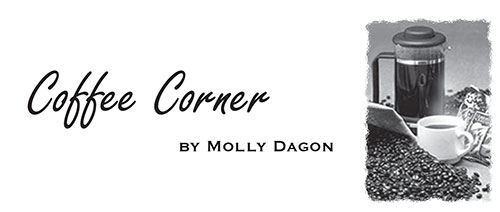
What is a barista? How do you pull a shot? And how do you tamp? Once inside a café a customer may hear such terms as barista, tamping, breve, and my own invented term "room to drive". But what are these things? Even the size and names of drinks baffle patrons. So let's clarify exactly what a barista is. A barista is the person who works in a café, but more specifically it is the person who physically makes the drinks. Before the barista makes a drink he/she will tamp the espresso grind. This means that pressure is being applied to the espresso head (the place where the espresso grind is held during extraction) using a round shaped mallet that fits the size of the espresso head. The act of tamping is important and crucial to the outcome of the shot pulled. Pulling a shot refers to the act of extracting the espresso. Good shots are pulled between 20-25 seconds; any shorter or longer than that is considered an under or over-extracted shot. The barista has only 10 seconds to get a shot into a drink before it is considered "dead".
There are also terms specific to how a drink should be made like breve or skinny. Breve means the customer wants the drink made with half and half, while skinny refers to skim milk. An au lait is half coffee and half steamed milk. A latte is espresso, steamed milk, and a little steamed foam at the top. Not to be confused with the latte is the cappuccino. A cappuccino is like an equation: 1/3 espresso, 1/3 steamed milk, and 1/3 foam. It can be made wet or dry based upon the customer's preference. Wet means that the cappuccino has more steamed milk than foam, while dry means it has more foam than steamed milk. To discern if a cappuccino is made correctly, it should feel very light (compared to a latte) when lifted. Finally, a mocha is the same thing as a latte but with chocolate.
If someone walks into a café but cannot decipher what size beverage to get because the size names are foreign, it is acceptable to ask for small, medium, or large. I promise the barista will be able to understand what size you desire even if you do not use the fancy names. I coined the term (or at least I believe I did) "room to drive", which means the customer wants a regular coffee without room for cream but still room at the top so there is no excess spilling. One personal qualm I encounter many times is when someone orders beans and I ask the person what they need the beans ground for. Usually the customer laughs at me and replies sarcastically, "For a coffee maker!" Well duh, what I meant was does it need to be ground for a cone shaped filter, flat bottom filter, French press, perculator, espresso, etc (the list goes on).
Hopefully these definitions make the café an easy place to understand and utilize!
molly@broadripplegazette.com
|
|
|
|
| Brought to you by: |

|
|
|
| Brought to you by: |
|
|

|
|
| Brought to you by: |
|
|
|
|
| Brought to you by: |
|
|||
|
Copyrighted Property Of Broad Ripple Publishing
Site terms Broad Ripple Random Ripplings is hosted at Ionos.com |

