|
Broad Ripple Random Ripplings


The news from Broad Ripple
Brought to you by The Broad Ripple Gazette
(Delivering the news since 2004, every two weeks)

|
| Brought to you by: |

|

|
|


|

|

|
Converted from paper version of the Broad Ripple Gazette (v06n13)
Indiana School for the Blind history - part six
posted: Jun. 26, 2009
In 1923, the Indiana state legislature appropriated $200,000 to a Commission to buy land for a new ISB location. Members included Indianapolis residents Walter E. Rich, J.F. Cantwell, Scott Brewer and Blufton native Ralph Todd.
Numerous sites were reviewed during a two-year period, but only three were recommended; the Wheeler property, the McGowan property and land on East Washington Street.
"The Commission initially approved the Wheeler site that was located on a bluff near Riverside Park with several usable buildings. It had the advantage of being located close to the city," wrote Elizabeth Wishard. However, limited growth opportunities existed that led then-Indiana Governor Emmett Branch to reject the selection.
After the Commission approved the McGowan site, Governor Branch thought the price was too high and returned the issue to the state legislature. A bill was introduced to relocate ISB on the grounds of East Washington Street, but this was bitterly contested as the legislature adjourned without taking action.
New Governor Ed Jackson met with the Commission, who agreed to authorize them to pay up to $1,200 per acre to buy the McGowan land. It was a 60-acre parcel in the 7500 block of North College Avenue that cost $72,000.
Self-made millionaire Hugh J. McGowan formerly owned the land. His widow, the former Kate Burnett of Kansas City, signed the property over to the State in 1925. Not well known to the general public today, McGowan's life was indeed notable.
Hugh J. McGowan was President of The Indianapolis & Terminal Company.
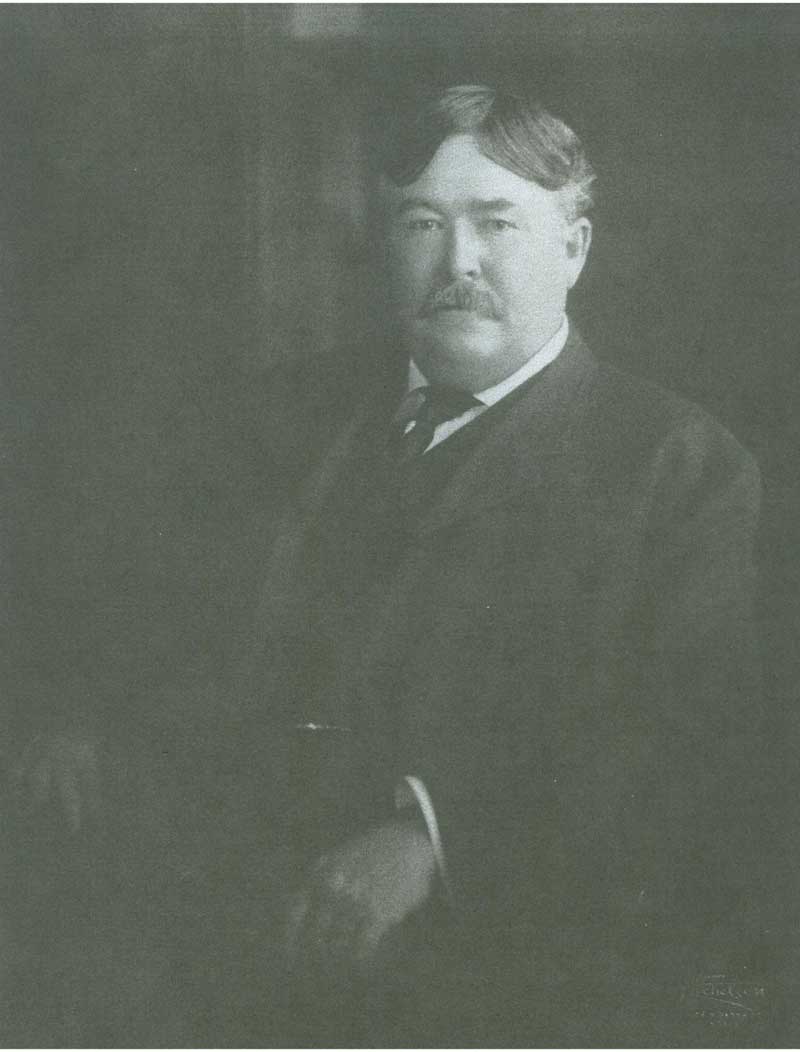
image courtesy of William McGowan
According to the Memorial and Genealogical Record of Representative Citizens of Indiana, Hugh McGowan was born on his father's farm in Clay Country, Missouri on January 25, 1857.
As a child, McGowan was industrious, making own pair of skates and a sled that he enjoyed during Missouri winters. He excelled in math and read the classics in school.
Presumed to become a farmer, he opted to leave for Kansas City in 1875 with $4.75 in his pocket and found a job raking cinders from under a Wabash locomotive for a brief time. He later worked as a section hand on the Wabash and then curried mules with a street car company prior to becoming a street car driver.
Meeting numerous children and adults put young McGowan in the public eye. He often let them ride in the street car to and from school. Parents saw him as a careful driver who looked out for their kids' welfare, gaining public trust and their respect.
He drove a carriage until becoming ill, which necessitated his return to Clay County near Liberty, Missouri. His lack of education motivated McGowan to enroll in courses at Kansas City Commercial College at age 22. Upon completing these courses, he drove a furniture company truck, but eventually became a packer for the same company several years. He later became an accountant for the Missouri Pacific Railroad.
After this, McGowan was hired by the Kansas City police department where he served as acting police captain for a time during his six years there. His popularity with the community as a civil servant prompted him to run for and win the Democratic nomination for Jackson county sheriff. Defeating 19 other candidates and spending $300 on his campaign, he served one term for four years before leaving office in 1890. With his public service salary, he financially turned around both the Barber Asphalt Company and Kansas City Gas Company during that decade.
mario@broadripplegazette.com
|
|
|
|
| Brought to you by: |

|
|
|
| Brought to you by: |
|
|

|
|

